
Creating Purpose in Retirement
Who Are You When the Name Badge Comes Off?

For decades, we answered the question “What do you do?” without hesitation.
“I’m a teacher.”
“I’m a truck driver.”
“I’m a Human Resources Director.”
Our job titles became shorthand for who we were.
But when retirement comes and the title disappears, the question can feel surprisingly disorienting: Who am I now?

Medical and wellness professionals are increasingly clear about this: retirement satisfaction is not just about financial stability. It is deeply tied to purpose. Research consistently shows that retirees who feel useful, engaged, and connected report higher levels of happiness, better cognitive health, and even longer life expectancy. Purpose, it turns out, is not a retirement luxury. It is protective.
According to retirement life coach Cyn Meyer, founder of Second Wind Movement (not affiliated with or endorsed by Older, Bolder & Better!), retirees who had clearly identified a sense of purpose experienced measurable health benefits.
Retirees were 24% less likely to become physically inactive, 33% less likely to develop sleep problems, and 22% less likely to experience an unhealthy Body Mass Index (BMI) if they had identified a purpose in their retirement.
Having a sense of purpose doesn’t just make retirement more meaningful — it makes it healthier.
My retirement didn’t unfold exactly as planned. I intended to retire in December 2023. Instead, I left my final position that September. The timeline shifted, but my preparation did not.
Long before spreadsheets, pension calculations, and retirement workshops, I had something better: examples.
I watched older relatives create retirements that looked joyful. My mother worked part-time in her profession until she was 80 — and still found time to cruise and travel. An uncle found purpose volunteering at a middle school. My grandmother mentored girls at her church well into her 70s. An 86-year-old aunt still travels with friends, edits this blog, and invests in her wellness through Tai Chi and strength-training classes.
None of them retired from life. They retired into it.
So when my own work chapter closed, I knew financial planning was only one piece of the retirement puzzle. Within weeks, I began training to offer writing workshops through Amherst Writers & Artists. I chose Substack over YouTube. I increased my volunteering with Soroptimist Indy Metro. An organization focused on improving the lives of women and girls through education and economic empowerment. Now, I work two days a week at Conner Prairie, a living history museum, that satisfies my love of lifelong learning and keeps me connected to people.
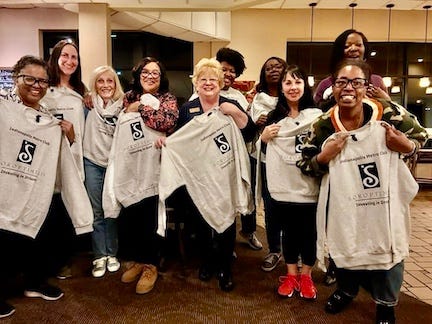
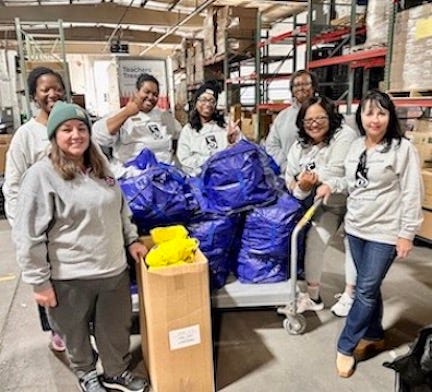
Not because I need to stay busy — but because I want to stay purposeful.
What I learned from watching my elders is this: purpose evolves. What animates us at 62 may look different at 72, 82, or 92. And sometimes, purpose arrives in forms we did not anticipate.
For many retirees, caregiving becomes part of the equation — caring for a parent, a spouse, or even an adult child. According to a 2025 report from AARP and the National Alliance for Caregiving, 63 million Americans are family caregivers.

Caregiving can be exhausting. It can also be deeply purposeful. It may not look like the retirement one imagined, but it is still a form of contribution, love, and meaning.
Retirement is not a single decision made on a final workday. It is a season of life — one that will likely stretch longer than ever since 85+ years-old is one of the fastest growing demographics in America.
You do not have to have it all mapped out. You do not have to launch something big. You do not have to replicate your former title in a new form.
You only need to remain curious about what gives your days meaning now.
When the name badge comes off, you are not diminished. You are reintroduced.
Retirement is not the end of usefulness. It is an opportunity to turn experience into impact.
To me, that is something to look forward to.
I love this!
So true…we all need purpose in our lives.